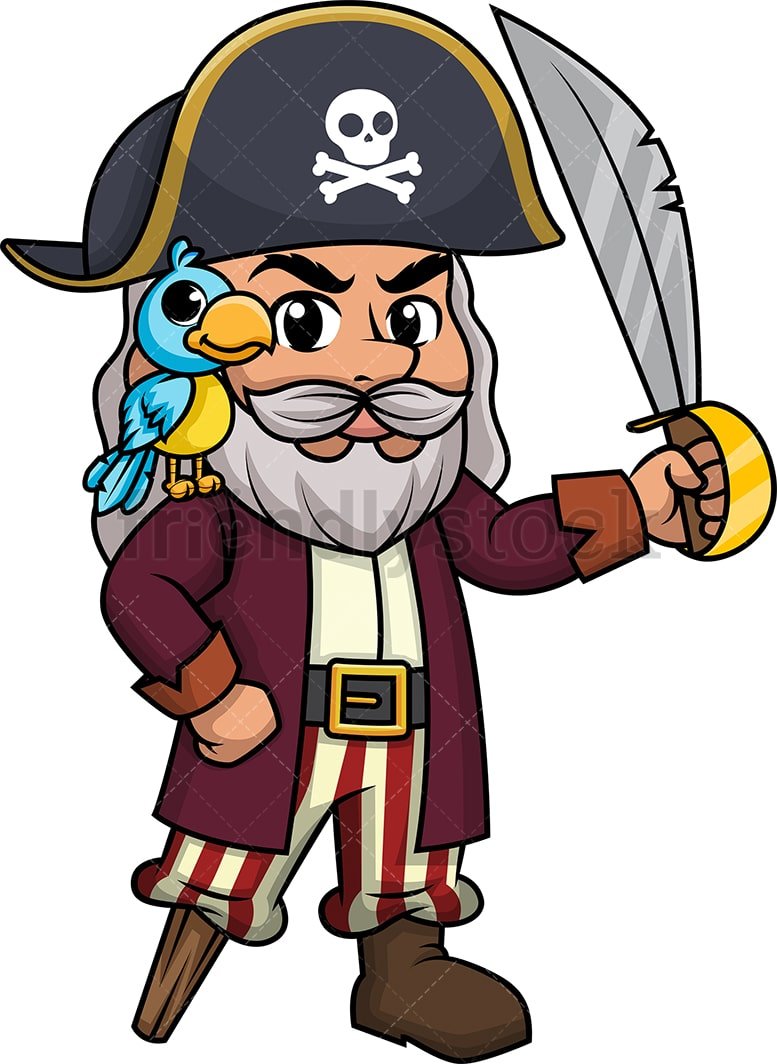
The sea mist hangs heavy in the air, the distant clang of cutlasses echoes, and a familiar cry of "Ahoy, matey!" sparks a glint of adventure in your eye. For generations, pirates have captured our imaginations, not just in historical tales but, perhaps most vividly, through the vibrant, often hilarious, and sometimes surprisingly profound world of cartoons. From slapstick buccaneers to epic sea adventures, the History and Evolution of Pirate Cartoons is a compelling narrative, reflecting the ever-changing landscape of animation itself, and offering a treasure trove of insights into our enduring fascination with these roguish figures.
It's more than just eye patches and talking parrots; it's about how a medium born from simple lines and movement grew to bring these legendary swashbucklers to life, shaping our understanding of adventure, freedom, and even rebellion.
At a Glance: Navigating the Waters of Pirate Cartoon History
- Early Roots: Pirates appeared in satirical illustrations and early comic strips as caricatures, embodying themes of adventure and villainy even before animation existed.
- Golden Age of Animation: Technological leaps (sound, color) allowed for more dynamic pirate characters and storylines, though often as antagonists or supporting roles in broader adventure narratives.
- Television Era: Mass media brought pirate themes into homes, expanding their reach and paving the way for dedicated pirate cartoon series.
- Digital Revolution: Modern animation techniques and the rise of global platforms, particularly anime, unleashed an explosion of diverse and complex pirate narratives.
- Beyond Entertainment: Pirate cartoons often serve as vehicles for social commentary, educational content, and a thriving economic industry, proving their cultural staying power.
- Future Horizons: Emerging technologies like VR and AI promise even more immersive and interactive swashbuckling adventures.
Why Pirates? The Enduring Allure of the Swashbuckler Archetype
Before we dive into their animated history, let's consider why pirates, of all historical figures, have such an undeniable magnetism. Pirates represent ultimate freedom – a life beyond the rigid rules of society, driven by treasure, adventure, and the open sea. They embody both villainy and heroism, often blurring the lines between the two. This duality, coupled with their distinctive visual aesthetic (eye patches, peg legs, parrots, treasure maps), makes them perfect fodder for storytelling, especially in a visual medium like cartoons.
From the romanticized figures of Robert Louis Stevenson's "Treasure Island" to the brutal realities of actual maritime marauders, the pirate image has always been adaptable. Cartoons, with their ability to exaggerate, simplify, and anthropomorphize, found fertile ground in this rich archetype, allowing them to explore themes ranging from pure slapstick comedy to epic tales of friendship and justice.
From Pages to Frames: Early Seeds of Pirate Satire (Pre-Animation)
The journey of pirate cartoons didn't begin with a projector or a drawing tablet; it started much earlier, in the realm of static art. The very origins of visual communication, from cave paintings to Egyptian hieroglyphs, show humanity's innate desire to tell stories through images. As art evolved through the Middle Ages and Renaissance, elements of caricature and satire began to emerge, often used to critique authority or simply evoke laughter. Imagine crude drawings of rebellious figures, perhaps on a crude ship, mocking the establishment – a distant ancestor to the pirate cartoon.
By the 18th century, satirical illustrations became a powerful tool in European newspapers and pamphlets. Artists like James Gillray used exaggerated features and scenarios to lampoon politicians and social norms. While direct "pirate cartoons" weren't a distinct genre, the spirit of the rogue, the anti-establishment figure, and the dramatic action scene were all being honed. The 19th century cemented this with the rise of editorial cartoons in publications like Punch magazine, and eventually, the birth of comic strips like "The Yellow Kid" in 1895. These static sequential art forms established visual storytelling conventions that would later be vital for animation.
In these early forms, pirates often appeared as stock villains or adventurous foils. They might be depicted as greedy, clumsy, or simply obstacles for the hero to overcome. The emphasis was on their visual distinctiveness – the hook, the patch, the skull and crossbones – which made them instantly recognizable symbols of danger or comic relief. This pre-animation period laid the groundwork, teaching artists how to convey character, action, and humor with simple lines, lessons that animators would soon build upon.
Setting Sail: The Dawn of Animated Pirates (Golden Age & Early 20th Century)
The early 20th century brought a revolutionary leap: the birth of animated cartoons. Pioneers like J. Stuart Blackton, with his "Humorous Phases of Funny Faces" (1906), and Winsor McCay, famous for "Gertie the Dinosaur" (1914), began to experiment with devices like the zoetrope and flip books to create the illusion of movement. This was a game-changer. Suddenly, those static pirate caricatures could leap, swagger, and fight!
The period from the 1930s to the 1960s is rightly known as the Golden Age of Animation, dominated by titans like Walt Disney and Warner Bros. Key advancements like the introduction of sound (think Mickey Mouse in "Steamboat Willie," 1928) and eventually full color (Disney's "Snow White and the Seven Dwarfs," 1937) profoundly impacted how pirates could be portrayed. Sound allowed for booming voices, clanging swords, and the crash of waves, while color brought the vibrant blues of the ocean and the rich reds of pirate flags to life.
While dedicated "pirate cartoon" series were still somewhat rare, the archetype flourished within broader adventure stories. Characters like Popeye the Sailor (debuting in cartoons in 1933) often faced sea-faring villains who, if not explicitly pirates, certainly shared their swagger, greed, and nautical nemesis traits. Popeye's muscular antics and battles against Bluto on the high seas captured the same spirit of maritime adventure and conflict. Disney's classic animated feature "Peter Pan" (1953) gave us one of the most iconic cartoon pirates of all time: the conniving, yet often comical, Captain Hook. This film demonstrated how animation could elevate the pirate narrative, creating a visually stunning world and characters with distinct personalities. These early forays cemented pirates as compelling, versatile figures in the burgeoning world of animation.
Charting New Waters: Television's Role in Pirate Popularity (Mid-20th Century)
The mid-20th century saw another pivotal shift: the rise of television cartoons. With shows like "The Flintstones" (1960) and "The Jetsons" (1962), animation moved from the movie theaters directly into living rooms, becoming a daily part of countless households. This mass distribution significantly broadened the audience for all types of animated storytelling, including those with pirate themes. Television allowed for serial narratives, meaning characters could embark on longer, more complex adventures over multiple episodes.
While many TV cartoons of this era focused on land-based antics or futuristic settings, the spirit of adventure was strong, and sea-faring quests or encounters with pirate-like villains were not uncommon. Hanna-Barbera, a prolific studio of the time, produced numerous adventure cartoons where heroes might stumble upon hidden islands, battle smugglers, or face off against characters with distinct pirate aesthetics. Think of villains in shows like "Scooby-Doo, Where Are You!" (1969) often featuring masked figures in old ships or haunted lighthouses, evoking a pirate-ghost mystique.
This era was about normalization. Pirates became a more common trope, digestible for younger audiences, often depicted in a sanitized, comedic light, far removed from their historical brutality. It cemented the visual language of cartoon pirates – the peg leg, the parrot, the "Arrr!" – into the popular consciousness.
Beyond the Horizon: Modern Pirate Cartoons and Digital Age Innovations (Late 20th Century to Today)
The late 20th century marked a period of increasing sophistication and diversification for cartoons. Shows like "The Simpsons" (1989) and "South Park" (1997) proved that animation wasn't just for kids, opening doors for more mature themes, intricate satire, and varied storytelling styles. This broader acceptance meant that a wider range of pirate narratives could be explored, from deep historical dives (even if fictionalized) to absurdist comedies.
The true game-changer, however, was the digital revolution. Software like Adobe Animate (formerly Flash), Toon Boom Harmony, and advanced 3D modeling tools completely transformed production. Animators could now create more intricate designs, smoother motions, and far more dynamic sea battles and complex character expressions with unprecedented efficiency. This allowed for visually stunning and ambitious pirate stories that would have been cost-prohibitive or technically impossible just decades prior.
This digital shift also coincided with the global influence of Anime. Japanese animation, with its distinct art styles, mature storytelling capabilities, and emphasis on long-form narratives, offered a fresh perspective. No discussion of modern pirate cartoons would be complete without acknowledging the monumental impact of "One Piece." Debuting in 1999, Eiichiro Oda's epic tale of Monkey D. Luffy and his Straw Hat Pirates sailing the Grand Line in search of the ultimate treasure has become a global phenomenon. It blends thrilling adventure, deep emotional bonds, intricate world-building, and a unique take on pirate freedom, showcasing the full potential of anime to explore the pirate archetype. "One Piece" alone exemplifies how modern animation, coupled with compelling storytelling, can create a multi-generational, culturally significant pirate narrative.
Other notable modern pirate cartoons include:
- "SpongeBob SquarePants" (1999): While not explicitly a pirate show, its nautical setting, talking parrot (Patchy the Pirate's companion Potty), and recurring pirate-themed characters or episodes (like the Flying Dutchman) constantly nod to pirate lore, making it a foundational series for many young viewers' introduction to the concept.
- "Jake and the Never Land Pirates" (2011): This Disney Junior series directly targets preschoolers, reimagining Captain Hook and Smee as bumbling antagonists to a group of young, heroic pirates. It's a testament to the enduring appeal and adaptability of pirate themes for even the youngest audiences.
- "The Pirates! Band of Misfits" (2012): While a stop-motion film rather than a traditional cartoon series, Aardman Animations' comedic take on a Pirate Captain and his crew highlights how different animation techniques continue to bring unique flavors to pirate stories.
The internet, serving as a global stage, further amplified this evolution. Web series and streaming platforms allow creators more freedom and direct access to audiences, fostering incredibly active fan communities around shows like "One Piece" and beyond. The digital age has truly opened the floodgates for a diverse fleet of animated pirate adventures.
For an even deeper dive into the specific characteristics and impact of animated pirates, explore All about pirate cartoons.
Thematic Treasures: What Pirate Cartoons Teach and Entertain
Beyond the entertainment value, pirate cartoons, throughout their evolution, have consistently served as powerful vehicles for broader messages and impacts.
Social and Political Commentary
Like much of the general cartoon landscape, pirate cartoons often dabble in social and political commentary. The very nature of pirates – living outside the law, challenging authority, forming their own unique societies – lends itself to exploring themes of:
- Freedom vs. Order: Do we crave absolute liberty, even with its dangers, or the safety of structure?
- Anti-Establishment: Pirates, by definition, defy empires and governments, offering a romanticized view of rebellion against oppressive systems.
- Inequality and Justice: Many fictional pirates are driven by a sense of injustice, seeking to right wrongs or redistribute wealth (even if only to themselves).
- Loyalty and Brotherhood: The tight-knit crew of a pirate ship often exemplifies fierce loyalty, teamwork, and chosen family.
- Greed and Morality: The pursuit of treasure inevitably raises questions about the cost of wealth and the choices one makes to attain it.
Through humor and exaggeration, pirate cartoons can simplify complex ideas, making them accessible to diverse audiences and sparking discussions about these timeless human dilemmas.
Education and Exploration
While highly romanticized, pirate cartoons can also play a significant role in education. They introduce concepts of:
- Geography: Exotic islands, vast oceans, and far-flung ports introduce viewers to different cultures and global locations.
- History (albeit fictionalized): They pique interest in historical periods, maritime exploration, and the realities (or myths) of seafaring life.
- Problem-Solving: Treasure hunts, naval battles, and navigating uncharted waters often require strategic thinking and quick wits.
- Cultural Exchange: The global reach of shows like "One Piece" fosters an appreciation for different storytelling traditions and visual styles.
By presenting difficult subjects through relatable characters and engaging stories, pirate cartoons make learning an adventure.
Economic Impact and Cultural Influence
Economically, pirate cartoons are a thriving industry. The popularity of characters and narratives translates into massive revenue streams:
- Merchandise: Toys, clothing, video games, comics – the market for pirate-themed merchandise is enormous.
- Branding and Franchises: Successful pirate cartoon series become powerful global brands, often spawning spin-offs, movies, and theme park attractions.
- Global Distribution: Streaming platforms and international broadcasting ensure that these stories reach audiences worldwide, generating revenue across print, television, and digital platforms.
The cultural influence is equally significant. Pirate cartoons help shape our collective imagination of what a pirate is, often softening the rough edges of history to create enduring archetypes that resonate across generations.
Navigating the Future: VR, AR, and AI in Swashbuckling Stories
The future of cartoons, including those featuring our beloved buccaneers, is being shaped by emerging technologies. Virtual Reality (VR) and Augmented Reality (AR) promise to revolutionize how we experience pirate stories. Imagine stepping onto a pirate ship, exploring a hidden cove, or even engaging in a sword fight, all within an immersive VR environment. AR could bring pirate characters directly into your living room, turning everyday spaces into fantastical backdrops for swashbuckling adventures.
Furthermore, Artificial Intelligence (AI) is poised to transform animation production. AI-assisted animation could streamline repetitive tasks, generate complex environmental details like realistic ocean waves, or even help writers craft intricate narratives by suggesting plot twists or character interactions. This could lead to faster production times and even more intricate, visually stunning pirate worlds.
These technologies promise not just new ways to watch, but new ways to participate in the narrative. Interactive elements, where your choices influence the story's outcome, could turn passive viewing into active adventuring, deepening the connection between audience and narrative. The creative process, from storyboarding to character design and sound design, will continue to evolve, pushing the boundaries of what's possible in animated storytelling.
Your Guide to the Grand Fleet of Pirate Cartoons
The journey of pirate cartoons, mirroring the broader history of animation, is a testament to human creativity and our timeless fascination with adventure. From the crude satirical sketches of the 18th century to the global phenomena of the digital age, animated pirates have adapted, evolved, and continually captivated audiences. They remind us of the thrill of the unknown, the lure of freedom, and the camaraderie found among a chosen crew.
So, the next time you encounter a cartoon pirate, whether it's a classic bumbling villain or a complex hero on an epic quest, take a moment to appreciate the rich tapestry of animation history that brought them to life. These swashbuckling characters are more than just entertainment; they're reflections of our deepest desires for adventure, rebellion, and a good laugh. So hoist the colors, chart your course, and keep exploring the boundless seas of animated storytelling – there are always new treasures to discover!